
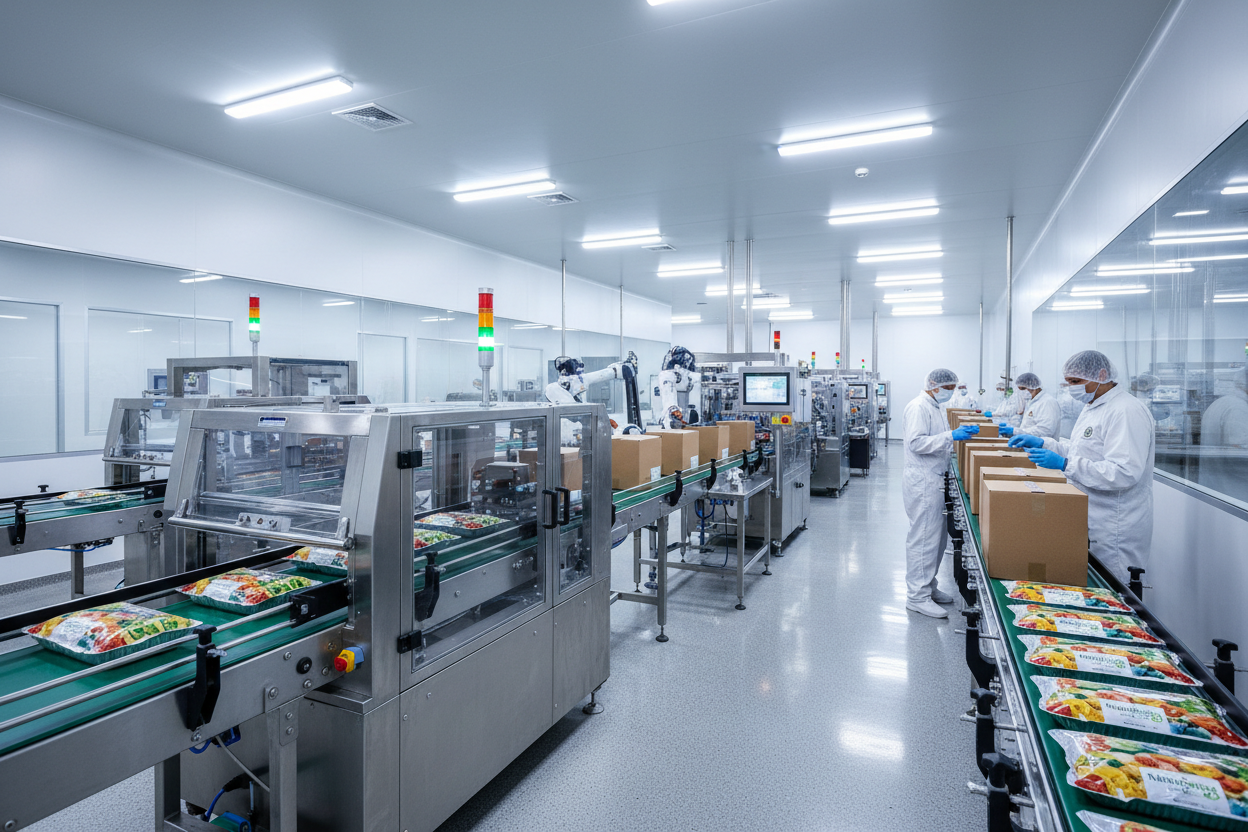
If you're managing a food packaging facility, you've probably faced the same internal debate: "Do we repair this machine one more time… or is it finally time to upgrade?"
It’s a decision that doesn’t just affect your maintenance budget, it impacts your throughput, your compliance standing, and even team morale. Every minute your line is down affects scheduling, delivery promises, and product integrity.
At Kwalyti, we’ve supported dozens of plant managers making this call. And while there’s no one-size-fits-all answer, there are patterns, data points, and signals that can guide you toward a smart, confident decision.
This guide breaks it all down - real-world insights into performance, compliance, cost, and long-term ROI - so you’re not guessing.
🔧 1. Is Repair Still a Reliable Option?
How do I know if packaging equipment is beyond repair?
If your team is spending more time repairing than running, that’s your first red flag.
Start by reviewing your service records:
- Are you dealing with the same breakdowns multiple times?
- Are your technicians frequently improvising because OEM parts are no longer available?
- Have repair costs crept up beyond 50% of what a new machine would cost?
More importantly: What’s the cost of the downtime itself? Even if the repair seems cheap on paper, the lost productivity, reruns, and labor hours may be more expensive than you think.
📊 Pro Tip: Run a 12-month repair cost analysis. You might be surprised how much you’ve already invested in “band-aid” fixes.

📈 2. Is Performance Holding You Back?
What are signs my packaging equipment is underperforming?
Let’s say the machine runs but are you chasing performance with every shift?
Common signs of underperformance include:
- Inconsistent seals or leaky packaging
- Misfeeds or misaligned labels
- Excessive product waste or shrink
- Long, error-prone changeovers
- Operator complaints or workarounds becoming the norm
In many cases, the machine can technically still run but it’s slowly draining time, materials, and morale. If your team is constantly nursing the machine just to finish a run, you’re losing hidden costs every day.
📦 3. Can It Still Meet Today’s Food Safety Requirements?
Can old equipment be upgraded to meet food safety standards?
Food safety compliance is constantly evolving and if your packaging equipment can’t keep up, you’re playing a risky game.
Older machines often:
- Weren’t designed with washdown or clean-in-place (CIP) in mind
- Use materials or finishes that are no longer food safe
- Lack the automation needed for traceability and batch control
Sometimes you can retrofit to improve compliance but many facilities hit a wall where upgrades become duct tape solutions. If your team has to modify procedures to work around your machinery’s limitations, it’s time to talk upgrades.
💰 4. What Does the ROI Say?
This is where most decisions get made or delayed.
Yes, a new piece of equipment comes with a price tag. But you have to look at the bigger picture:
- How much are you spending per month on service calls, parts, and emergency downtime?
- How much product are you wasting due to inconsistent packaging?
- How much faster could a modern machine run?
- What would that extra efficiency mean for labor costs?
At Kwalyti, we’ve helped clients realize they were spending more annually on maintenance and waste than the cost of a new install. We also help identify opportunities for partial upgrades, hybrid systems, or custom retrofits that balance performance and budget.
🔄 5. Is There a Middle Ground?
Absolutely.
You don’t always need a full rip-and-replace. In fact, hybrid solutions are often the smartest move especially in plants trying to extend the life of legacy systems without holding back performance.
We’ve helped clients:
- Replace just the high-failure modules
- Upgrade control systems while keeping the frame and core components
- Add smart automation or robotics to existing lines
- Fabricate custom machining solutions that solve a very specific bottleneck
You’d be surprised what a well-placed modification can do, sometimes a single upgrade can eliminate your biggest headache.
🧠 Final Thoughts
There’s no shame in repairing equipment, it’s responsible, it’s cost-conscious, and it often makes sense.
But eventually, every machine reaches a point where repairs are just buying time not fixing the problem. The question is whether you want to be reactive… or proactive.
Upgrades come with upfront cost but when they’re done right, they pay off fast. Less waste, fewer headaches, happier operators, and a packaging line that works with you not against you.
📞 Not Sure Which Direction to Go?
Let’s talk through it.
At Kwalyti, we don’t push sales, we help you make the best decision for your plant, your team, and your future production goals.
👉 Request a Free Packaging Line Assessment or give us a call at (630) 761-8040!
Share:
How Precision Parts and Machinery Keep Packaging Lines Running at Peak Efficiency
Top 5 Ways to Reduce Downtime on Your Food Packaging Line